
Joint Review Meeting Strengthens Collaboration to Accelerate Delivery of NAVCDP and FSRP
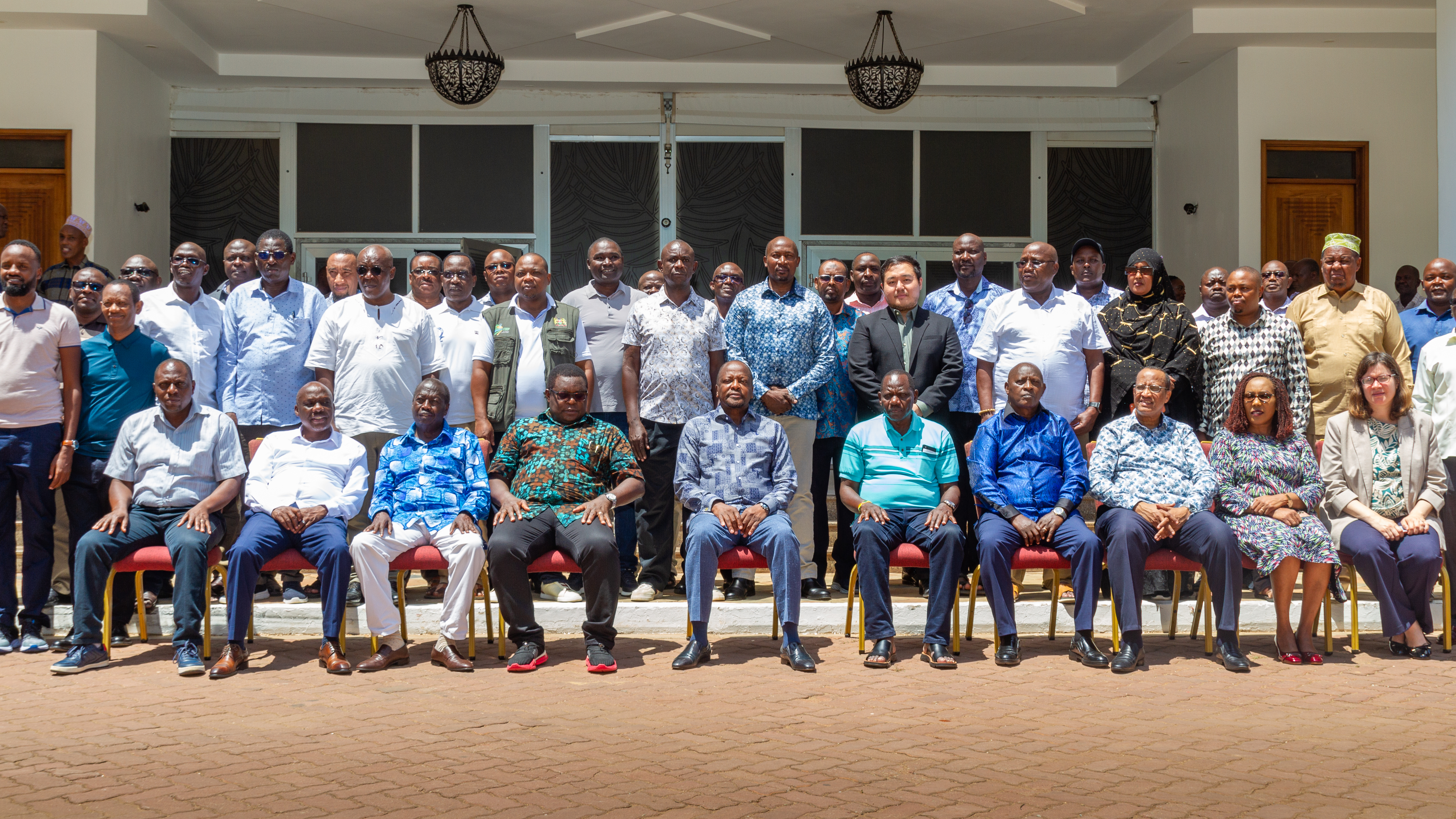
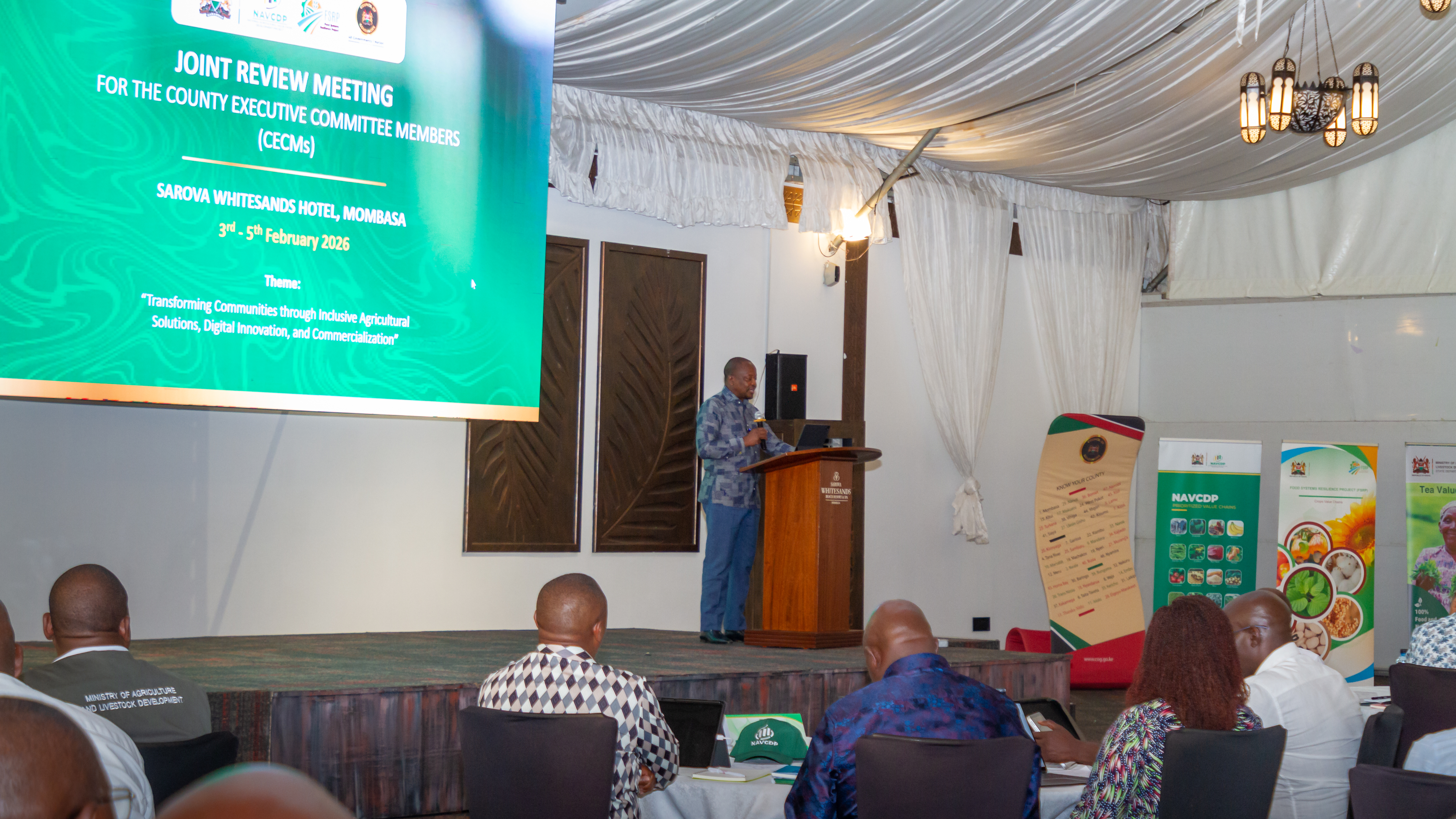
County governments, the national government, and the World Bank are convening in a Joint Review Meeting to assess progress and accelerate implementation of the National Agricultural Value Chain Development Project (NAVCDP) and the Food Systems Resilience Project (FSRP). Unlike a one-off consultative forum, the Joint Review Meeting is structured as a practical, working engagement. It brings together County Executive Committee Members for Agriculture, chief officers, national institutions, the Council of Governors, and development partners to jointly interrogate implementation realities, address emerging bottlenecks, and align priorities as both projects transition into a more results-intensive phase.
Communication, Ownership, and Results
Speaking during the engagement, Sen. Mutahi Kagwe, Cabinet Secretary for Agriculture and Livestock Development, emphasised that successful delivery of large-scale programmes such as NAVCDP depends not only on implementation, but also on effective communication.
He noted that reforms, investments, and results must be clearly communicated to citizens to strengthen transparency, public ownership, and confidence in the agricultural sector. Development financing, he added, carries responsibility and must translate into measurable improvements in food production, job creation, and household incomes, captured in his rallying call: “Enough Food, Enough Jobs, Enough Said.”
Counties Encouraged to Learn From Each Other
The Chair of the Council of Governors Agriculture Committee, Kenneth Lusaka, underscored the value of the review as a peer-learning platform for counties. Using shared benchmarks, counties were grouped based on implementation progress, systems readiness, and results achieved. High-performing counties were recognised for strong leadership, coordination, and execution, while those facing challenges were encouraged to learn from peers, adopt proven approaches, and strengthen internal systems. Participants stressed that the exercise is not intended to promote competition for its own sake, but to support collective improvement and ensure that food security outcomes are achieved nationwide.
County Performance League and Awards
A key highlight of the Joint Review Meeting was the County Performance League Presentation and Awards Ceremony, which institutionalised performance tracking as a core accountability and learning tool under NAVCDP.
Counties were assessed using a structured, data-driven performance framework covering:
• Overall implementation progress and utilisation of funds
• Community mobilisation and farmer extension
• FPO–CIG linkages and service provision
• SACCO savings mobilisation and access to credit
• Irrigation expansion under FLID
• Agripreneur deployment and service efficiency
• HR and procurement efficiency
The framework is evidence-based, transparent, and scientifically determined, reinforcing credibility and fairness in the rankings.
Kiambu County emerged as the overall top performer among all NAVCDP implementing counties, earning Gold for strong leadership, systems readiness, and results achieved. Uasin Gishu County ranked second, while Bungoma and Migori counties tied for third place. Beyond overall rankings, counties were also recognised across thematic performance areas, highlighting that strong delivery requires balanced performance across institutional, technical, financial, and community-facing functions.
County-Led Project Design at the Centre
County leaders reiterated that while development partner financing and technical support are critical, project ownership must remain firmly with county governments. The meeting reinforced several key principles:
• Counties must lead in identifying priorities based on local realities
• Development partners should support and enable county-defined interventions
• Projects should not be externally designed and imposed
• Resources must translate into visible, practical results at community level
This emphasis on county leadership was repeatedly cited as essential for sustainability and long-term impact.
Tackling Implementation Bottlenecks
A central focus of the review was identifying and addressing bottlenecks affecting implementation at county level. Counties and national teams held candid discussions on approval processes, coordination across technical and fiduciary functions, and the need for clearer and faster communication between implementing units.
The discussions highlighted that strengthening these systems is particularly critical for NAVCDP, given its scale, national reach, and reliance on strong county ownership for effective delivery.
Digital Systems, Advisory Services, and Sustainability
The review also examined how digital systems can better support delivery of NAVCDP. Counties discussed integration of farmer registration, advisory services, and data platforms into routine county operations to improve planning, monitoring, and accountability. Participants emphasised that aligning these systems with existing county structures is key to ensuring continuity and long-term use beyond the life of the projects.
Aligning NAVCDP and FSRP for Greater Impact
Progress under FSRP was also reviewed, particularly in relation to resilience building, drought response, and food systems preparedness. Counties implementing both projects identified opportunities for stronger complementarity, especially around climate-smart agriculture, water management, and community resilience. This alignment is expected to reinforce investments, reduce duplication, and strengthen overall impact at county and community levels.
From Dialogue to Action
A recurring message throughout the meeting was the need to move decisively from planning to action. The ultimate measure of success, the Cabinet Secretary noted, is impact at community level, on farms, in cooperatives, and along value chains.
Priority outcomes remain:
• Increased food production
• Job creation, particularly for youth
• Efficient use of public resources
• Delivery of value for money
Recognition, Partnerships, and the Road Ahead
The Cabinet Secretary congratulated counties recognised for strong performance and expressed confidence that more counties will be recognised in future review cycles as systems strengthen and delivery accelerates. Appreciation was extended to the World Bank Group and other development partners, including IFAD and FAO, for their continued support to Kenya’s agriculture sector. As the Joint Review Meeting continues, focus is shifting to clear follow-up actions, strengthening governance mechanisms, improving coordination between counties and national teams, and addressing implementation challenges early and decisively. By keeping counties at the centre of decision-making and reinforcing collaboration across all levels, NAVCDP and FSRP are positioning themselves to accelerate delivery and leave behind strong systems that will continue to support agricultural transformation and food security in Kenya.