
George Nderitu Story
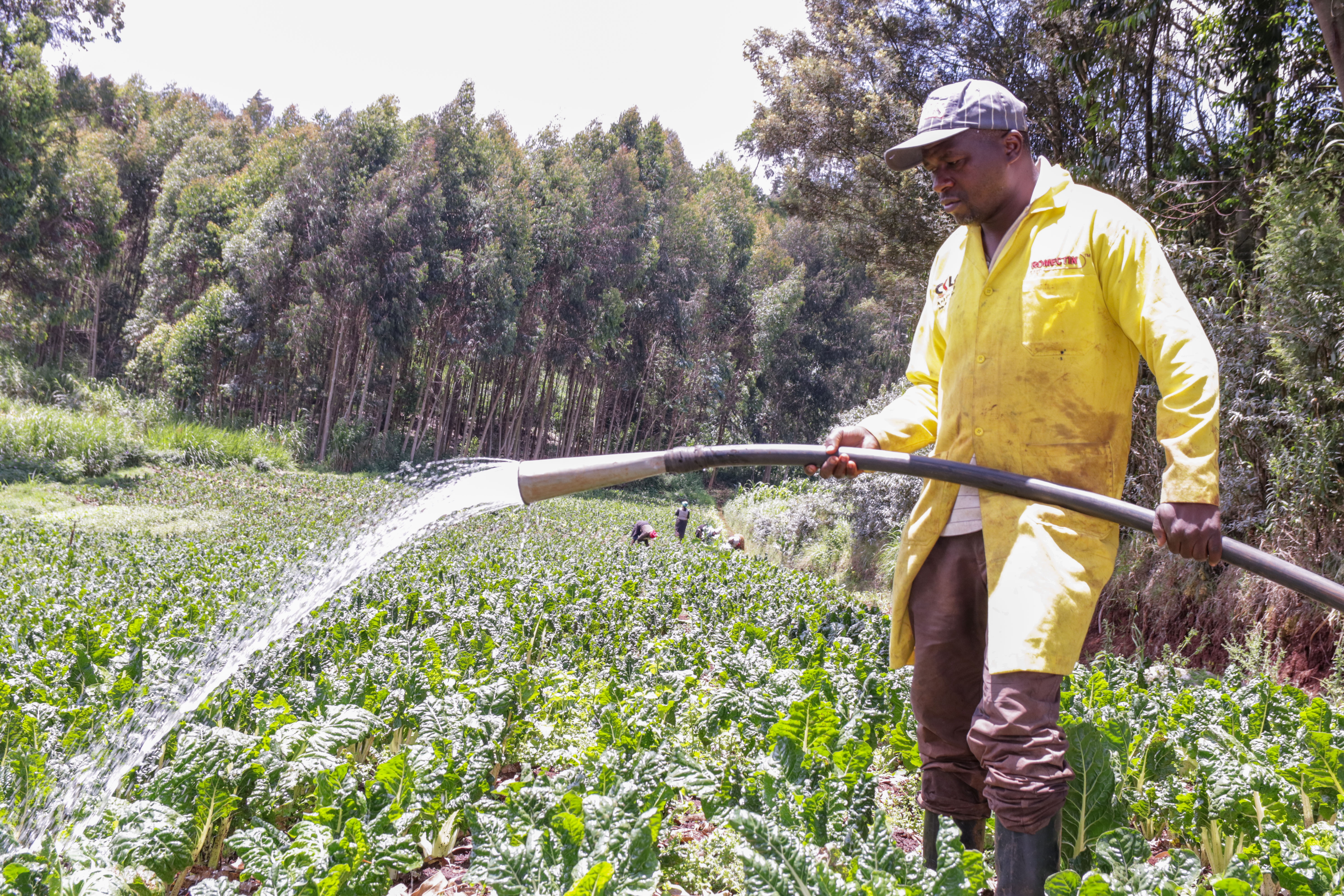
From the Matatu Business to Market-Focused Farming: George Kirato Kimani’s Journey in Horticulture
For many years, George Kirato Kimani earned his living in the matatu business, travelling long distances between Nairobi, Kisii, and Narok. The work was demanding, unpredictable, and kept him away from home for long stretches. Over time, George began to reflect on his future and made a bold decision that would change his life.
He left the transport business and turned his attention to farming.
Starting Small, Thinking Big
George began his farming journey on a quarter-acre piece of land, planting sukuma wiki. The crop performed exceptionally well, giving him both confidence and motivation. Demand for his produce grew steadily, and soon he began supplying customers beyond his local area.
At first, he sold his vegetables at Limuru market, but as production increased, he shifted to larger markets such as Malindi and Kongowea, where demand and returns were better. This market driven approach marked an important step in his transition from subsistence farming to farming as a business.
Expanding the Farm Through Crop Rotation
As his income stabilized, George acquired one acre of land. With increased space came a strategic decision: he stopped growing sukuma wiki and introduced crop rotation, starting with spinach. Once again, the results were impressive.
Spinach performed so well that George began employing workers on the farm an important milestone that signaled his growth into a commercial-scale farmer.
Building Skills Through Training
Recognizing that success in farming requires knowledge as much as effort, George enrolled in agricultural training under NARIGP. Through these trainings, he gained practical skills in crop management, planning, and sustainable farming practices.
“The lessons I learned at NARIGP opened my eyes,” George says. “They inspired me to aim higher and think of myself as a future large-scale farmer.”
Overcoming Water Challenges with Determination
One of George’s biggest challenges was water access. His farm relied on a hand-dug well, about 120 feet deep, which produced very little water especially during the dry season when water levels dropped drastically.
Rather than giving up, George invested in a long-term solution. He deepened the well by an additional 50 feet twice. The effort paid off. Today, the well has sufficient water to support farming activities throughout the year.
He went on to purchase a water pump and pipes, gradually installing an irrigation system across the farm. While the system is not yet complete, George continues to improve it, with the goal of placing his entire farm under reliable irrigation.
Farming with Confidence and Certainty
With improved water access and irrigation, George now farms with confidence.
“Whenever I work on my farm now, I am 100 percent sure I will harvest,” he says. “I can pay my workers, and I also work alongside them.”
Reliable production has given him financial stability, strengthened his commitment to farming, and reinforced his belief that agriculture can be a sustainable livelihood.
A Message to Fellow Farmers
George’s journey from the matatu business to horticulture carries a powerful message.
“Farming requires commitment and dedication,” he says. “Anyone with land and the ability should not sit idle. There is still money in farming, and one day they will enjoy the benefits of their land.”
A Story of Resilience and Growth
George Kirato Kimani’s story reflects the impact of knowledge, persistence, and investment in water and irrigation. With continued improvements and support, he is steadily progressing toward his goal of becoming a large-scale farmer demonstrating that with the right mindset and tools, farming can be both profitable and transformative.